Humanoid Robots vs. Electric Vehicles: What Robotics Startups Can Learn from China's NEV Boom
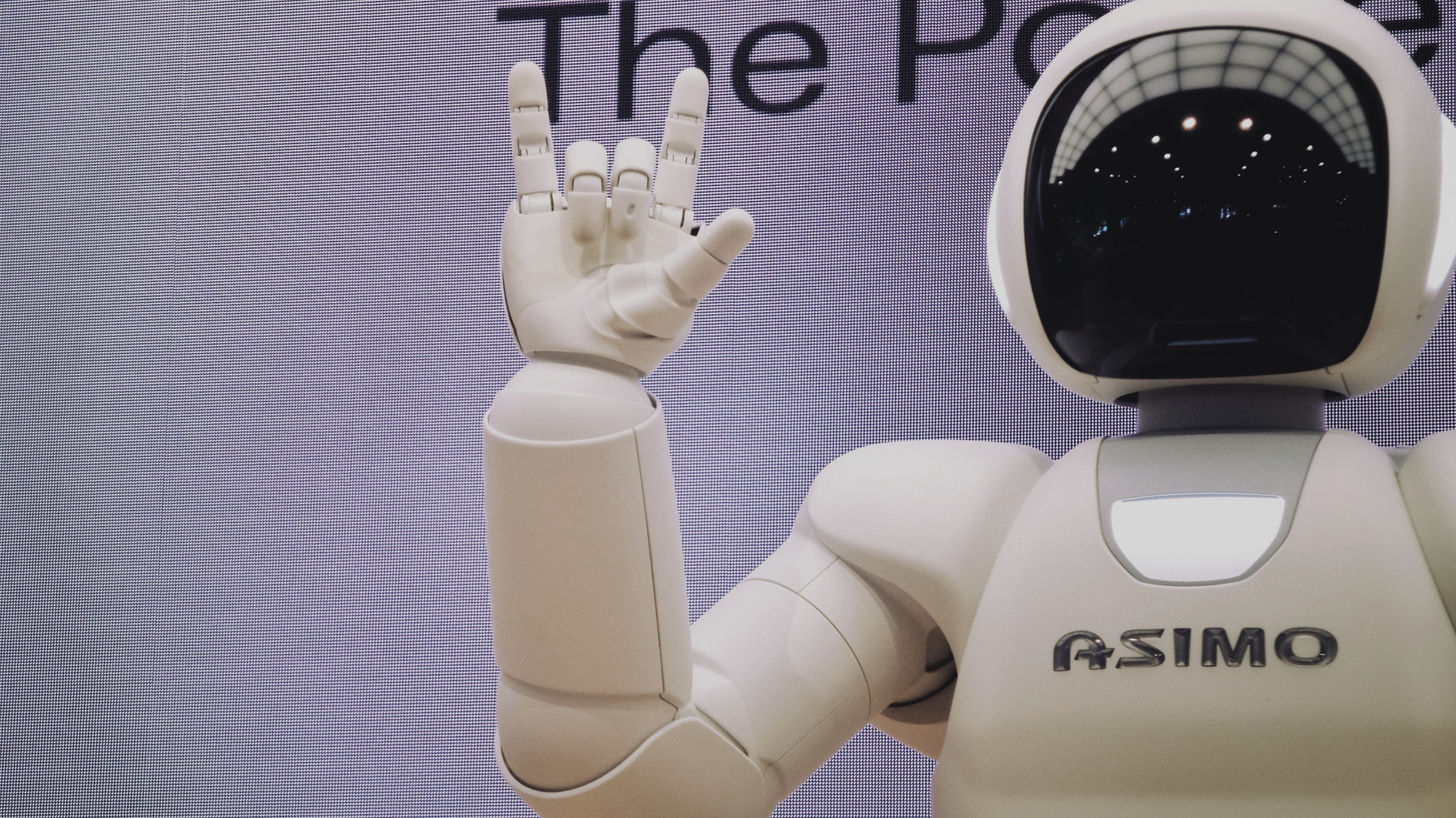
Humanoid robots are going through what electric vehicles experienced in China about ten years ago: a boom fueled by policy and capital. Most startups will not survive the funding winter that follows. Those who know the patterns from the EV market have a much better chance.
Key takeaways
The humanoid robot market follows a double-peak cycle: hype bubble, funding winter, then a sustainable breakthrough.
Investors watching the Chinese market expect more than 90% of today's robotics startups to fail during the winter.
The winter is likely to be shorter than for EVs: 2 to 3 years instead of 5 to 6, because AI models are improving very quickly.
Survival takes real use cases, a clear niche focus, at least 6 months of cash runway, a balanced team, and moats built before the big players arrive.
Why compare humanoid robots with electric vehicles?
This article is based on in-depth conversations with investors who follow the Chinese market closely. One question was at the center: Will humanoid robots repeat what happened in the market for new energy vehicles (NEV)?
NEV is China's umbrella term for battery-electric, plug-in hybrid and fuel cell vehicles. China built this market about a decade ago with subsidies and large amounts of venture capital. Hundreds of manufacturers appeared, and most of them disappeared again. The survivors now shape the global market.
What do humanoid robots and electric vehicles have in common?
Three patterns repeat:
The double-peak cycle. First, a bubble forms, driven by policy and capital. It bursts, and a harsh funding winter follows. Only then are technology and market ready for a real, lasting breakthrough.
Extreme failure rates. As with early EV startups, more than 90% of today's robotics companies are expected not to survive the winter.
The shadow of the giants. Sooner or later, large tech and automotive groups with massive financial power will enter the market and fundamentally change the competition.
How is the robotics market different from the EV market?
Robotics differs in three ways. The winter will be shorter, but the bubble will be bigger.
Factor | Electric vehicles (NEV) in China | Humanoid robots |
Main driver | Batteries, charging infrastructure, subsidies | Large AI models |
Length of the funding winter | 5 to 6 years | expected 2 to 3 years |
Barriers to entry | high: capital in the hundreds of millions, strict licenses | low: hardly any capital or licensing hurdles |
Technical complexity | Benchmark | 20 to 100 times higher, according to expert estimates |
Shorter winter: AI is developing superlinearly. Because AI models are the key driver of humanoid robots, the industry should move through the trough much faster.
Bigger bubble: Without licensing and capital hurdles, almost anyone can found a robotics startup. The risk grows that companies with strong marketing and weak technology crowd out real innovators. Bad money drives out good.
Higher bar for market readiness: A market-ready humanoid robot is many times more complex than an electric car. The path from prototype to product is correspondingly longer.
How can robotics startups survive the funding winter? 5 lessons from the EV market
The EV pioneers showed what works and what doesn't. Five strategies carry over directly to robotics
1. Wait for the real turning point
Subsidies and record funding rounds are not a sign of market maturity. The EV breakthrough only came once battery prices fell, charging infrastructure was in place and the software had matured.
For humanoid robots, this means the market will only take off when three conditions are met at the same time:
The AI models work reliably.
Hardware costs make economic sense for factories.
Operation is simple enough for workers to use the robots without lengthy training.
2. Real use cases beat high valuations
Because barriers to entry are low, there are plenty of “PowerPoint startups.” What actually counts is different: a real deployment scenario, a prototype, and customers who test the product in daily operations. A verified use case with real user data is worth more than any press release about a new funding round.
3. Niche before general-purpose robots
Trying to build an all-purpose humanoid from day one is hard to sustain financially. Successful carmakers took a different path. They started in a clearly defined, unoccupied niche, solved a concrete problem there and proved their business model. Only once you dominate a niche should you scale to the mass market.
4. Secure cash and balance the team
The funding winter is coming. The basic rule: keep cash reserves for at least 6 months of operations.
Many robotics startups also fail not because of the technology, but because of the team. Founding teams often consist of excellent AI and hardware engineers. What is missing are experts in supply chain, finance and scaling. Those who don't close these gaps will fail at series production at the latest.
5. Build moats before the giants arrive
Large tech and automotive groups may seem slow at first. When they enter a market, they do so with enormous force. The most effective protection for startups is a moat that money cannot buy in the short term:
exclusive data from real deployment scenarios
close, reliable B2B customer relationships
unmatched speed in hardware iteration
What does this mean for Europe and Saxony?
The Chinese market shows how quickly hype turns into a shakeout. Europe has the chance to avoid the same mistakes: fewer valuation records, more industrial application.
This is exactly where regions like Saxony are strong. Robotics startups find research, industry and potential pilot customers in close proximity. Robot Valley connects these players so that prototypes turn into verified use cases.
Conclusion: survival is the only metric
The race for humanoid robots is not a sprint but a marathon of 10 to 20 years. In the current phase, one thing matters above all: survival. Those who make it through the coming funding winter have the chance to become technology leaders of the coming decades.
About the author
Yijun Yu is the founder of the Sino-Cooperation Platform, which he co-founded in 2016. The platform describes itself as a Sino-German entrepreneur club for Industry 4.0. It connects companies, research institutions and local governments in both countries.
According to the platform, its community includes more than 5,200 active entrepreneur members and over 200 industry associations. Its Chinese media channel on “Made in Germany” reaches more than 250,000 subscribers. Since 2012.
He brings a technical view of both industries: he studied automotive engineering at Jilin University and holds a master's degree in mechanical engineering from TU Clausthal in Germany.